How to Build an App Like Instagram in 2026: Features, Tech Stack, and Real Cost


Create engaging, high-performance mobile applications tailored to your business needs. We craft future-ready apps that offer smooth user experiences on all devices.
Build robust and scalable websites and CMS platforms that help you manage content effortlessly. Our development ensures a seamless digital presence.
Launch secure, feature-rich online stores with intuitive shopping experiences. We build tailored eCommerce platforms designed for growth.
Design captivating games with immersive gameplay and stunning graphics. From concept to launch, we build engaging experiences that players love.
Enhance your customer relationships with customized Salesforce implementations. Drive growth and efficiency with smarter CRM solutions.
Harness artificial intelligence and machine learning to automate workflows and gain actionable insights. Our AI transforms data into smart decisions.
Accelerate your software delivery lifecycle with continuous integration, delivery, and infrastructure automation to boost efficiency.

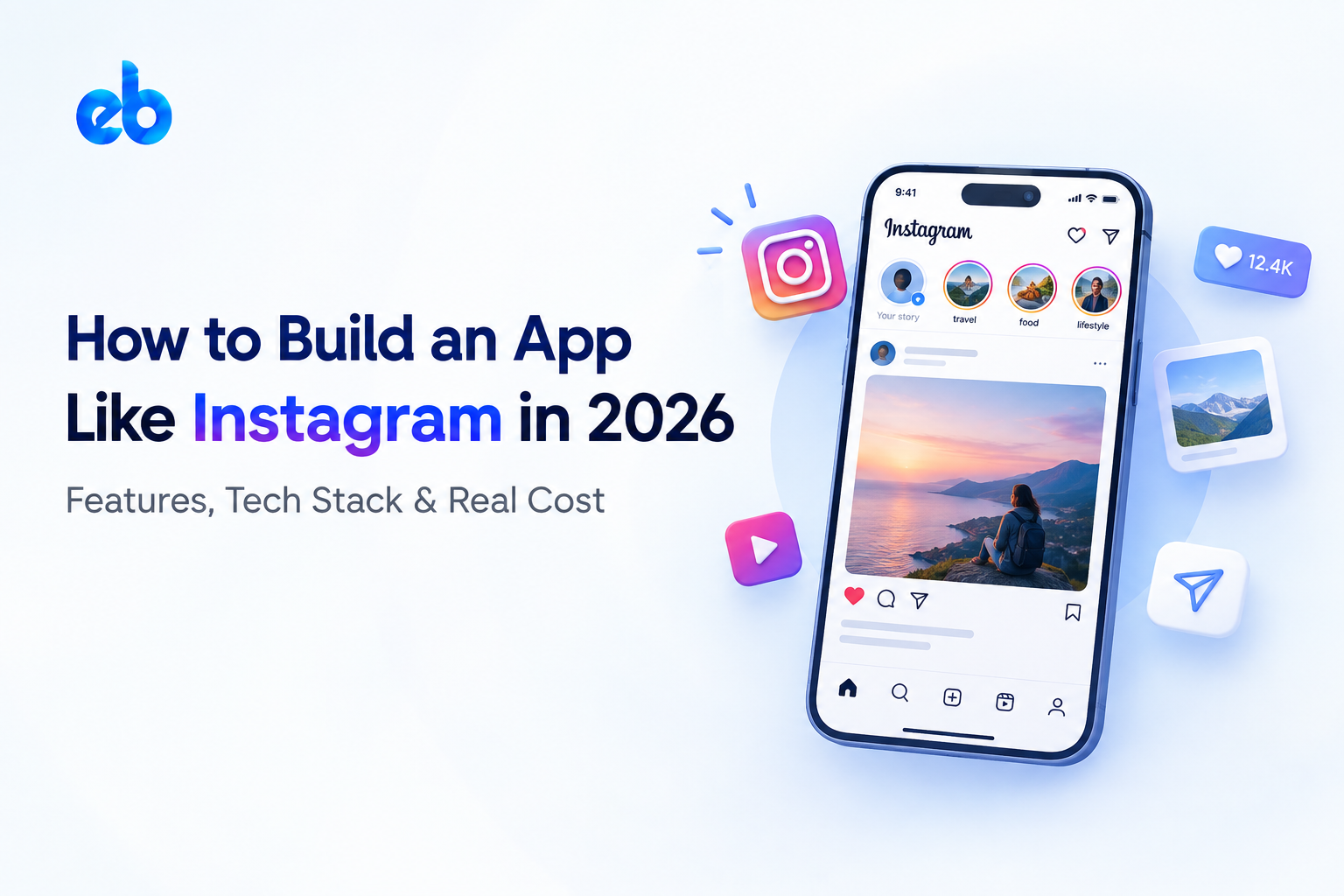
A founder sent me an old blog post last week quoting $6,500 to build “an app like Instagram.” I had to check the date. That number hasn’t been real since before Instagram had Stories. Today, Instagram runs at roughly 3 billion monthly active users, and building anything in that category means real-time feeds, video infrastructure, and moderation systems that a $6,500 budget wouldn’t cover for a single screen, let alone a platform.
When the team at EngineerBabu, a CMMI Level 5 product engineering company that’s shipped 500+ projects across 20+ countries, built the real-time field intelligence system for Simba Beer, the hard part wasn’t the UI, it was the infrastructure behind instant updates at scale. That’s the same architecture problem underneath any photo or video-sharing app: the feed, the notifications, and the activity stream all have to update in near real time for thousands of concurrent users, and that’s where most cost estimates for this category fall apart.
Building an app like Instagram means building a content-sharing platform with a personalized feed, media upload and editing, social graph (follows and followers), real-time engagement (likes, comments, direct messages), and Stories-style ephemeral content, backed by infrastructure that scales as your user base grows.
That’s a fundamentally different build than a simple photo-sharing tool. The feature list looks similar to a portfolio app on paper. The backend behind it is not.
Registration, push notifications, and a search bar are table stakes, every content app needs them, and none of them are where your budget actually goes. Here’s where it does.
| Feature | What It Requires | Estimated Cost |
| Personalized feed | Ranking algorithm, engagement data pipeline | $15,000-$40,000 |
| Media upload & editing | CDN, compression, filters, image/video processing | $10,000-$25,000 |
| Stories (24-hour content) | Ephemeral storage, auto-expiry jobs, view tracking | $8,000-$18,000 |
| Direct messaging | Real-time infrastructure, read receipts, media sharing | $10,000-$25,000 |
| Push notifications at scale | Activity-triggered, segmented, high-volume delivery | $3,000-$8,000 |
| Content moderation | Automated flagging, reporting workflow, review queue | $8,000-$20,000 |
Content moderation is the one every founder underestimates, and it’s not optional the way it might have been in 2017. A platform with user-generated content needs a reporting and review pipeline before launch, not after your first abuse complaint.
For a focused MVP, photo upload, basic feed, follow system, and comments, expect $40,000 to $90,000 and a 3-5 month build. That’s the version worth shipping first: enough to prove people will actually use it before you spend on Stories, DMs, or a recommendation algorithm.
A full platform with Stories, direct messaging, a personalized feed algorithm, and moderation infrastructure runs $150,000 to $300,000, with a 6-10 month timeline. Cross-platform development (Flutter or React Native) covers both stages at 25-40% below a native build, and for a content app where the interface is lists, feeds, and media, that gap in performance is not something users notice.
The lesson from building Simba Beer’s real-time system translates directly here: real-time features aren’t a feature; they’re an architecture decision that touches everything else. Once your feed needs to update live and your notification system needs to fire the instant someone follows or comments, your backend has to be built around that from day one, not bolted on after the fact.
I’ve seen founders scope a feed as “just a list of posts” and then discover mid-build that ranking, real-time updates, and pagination at scale are each their own subsystem. That’s not a scoping mistake unique to this category, it’s the exact pattern I described in our piece on the cost multipliers founders miss across every app category. Feed algorithms are just where it shows up hardest in a social media app specifically.
Not every piece of this needs custom engineering. Here’s the honest build-vs-buy call on a photo-sharing app.
Build. This is your differentiator and it needs to reflect your actual engagement data, not a generic library.
Build the review queue, buy the detection. Services like Amazon Rekognition or Hive flag content; your team builds the human review and appeals process around it.
They build every Instagram feature because Instagram has it, not because their users need it. Instagram’s feature set today reflects over a decade of iteration on a platform that already had product-market fit. A new entrant copying the full feature list before proving anyone wants a single core loop is building someone else’s roadmap, not their own.
They underprice the moderation and trust-and-safety layer. A content platform without a reporting pipeline isn’t a leaner MVP; it’s a liability the moment your first user posts something that shouldn’t be there. This is the same discipline that shapes every compliance-heavy build we do, the review process has to exist before scale, not after an incident forces it.
They treat the social graph as a database table instead of a core system. Follows, followers, and mutual connections look like simple relationships until you need to compute a personalized feed from them at scale, and that’s exactly where a “simple” schema decision from month one becomes an expensive rewrite in month eight.
If you’re scoping a content or social app and want an honest read on which features actually earn their place in v1, that’s usually the conversation I’m on. Email me at mayank@engineerbabu.com with what you’re building.
Mayank Pratap, Co-founder, EngineerBabu. 14 years building products, personally on every scope and architecture call at EngineerBabu, CMMI Level 5, Google AI Accelerator Top 20 (2024), 500+ projects across 20+ countries. See case studies.
A focused MVP with feed, upload, and follow features runs $40,000 to $90,000. A full platform with Stories, direct messaging, and a personalized feed algorithm runs $150,000 to $300,000, depending on moderation depth and scale requirements.
Registration, media upload, a basic chronological feed, follow/follower relationships, and comments. Stories, direct messaging, and algorithmic ranking can wait for v2 once the core loop is validated.
Cross-platform, for the overwhelming majority of content apps. The interface is lists, feeds, and media display, none of which benefit meaningfully from native-only capability, and cross-platform saves 25-40% on build cost.
A focused MVP takes 3-5 months. Adding Stories, direct messaging, and a full moderation pipeline extends that to 6-10 months for a complete platform.
Content moderation and trust-and-safety infrastructure. It’s rarely on a founder’s initial feature list and it’s not optional once real users start posting.
No. A chronological feed validates the core product first. Build the ranking algorithm once you have real engagement data to train it against, not before.